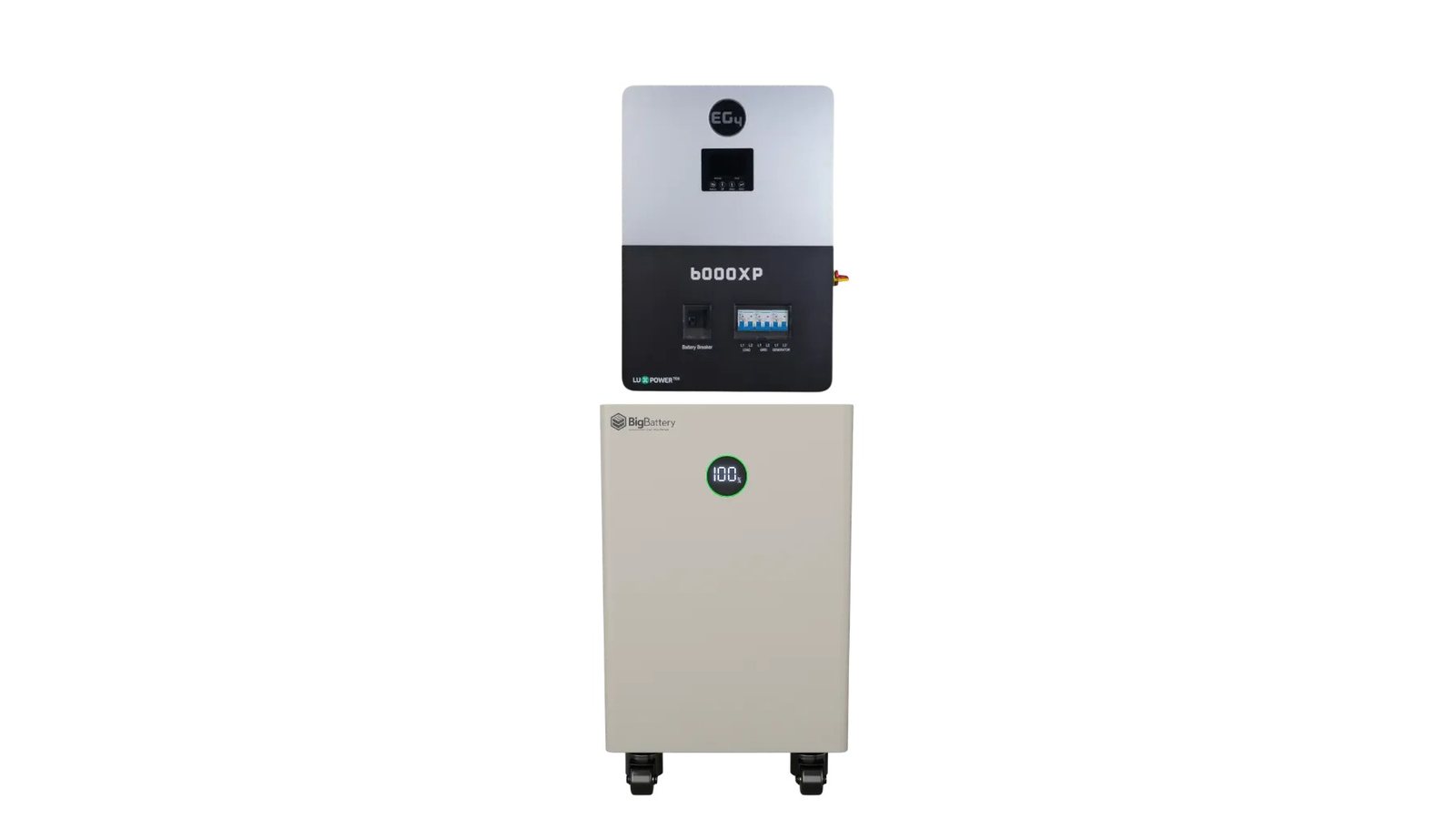
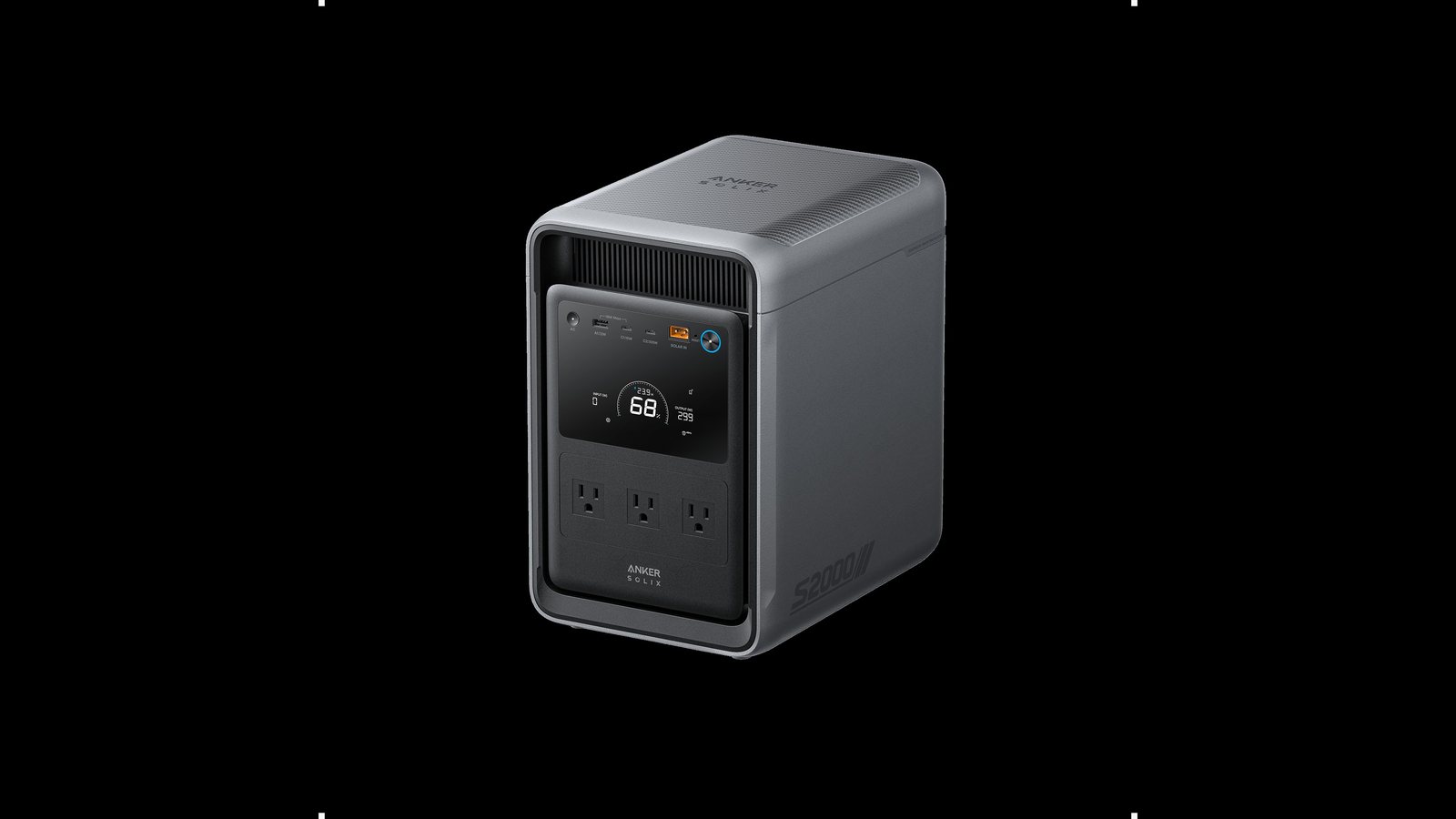
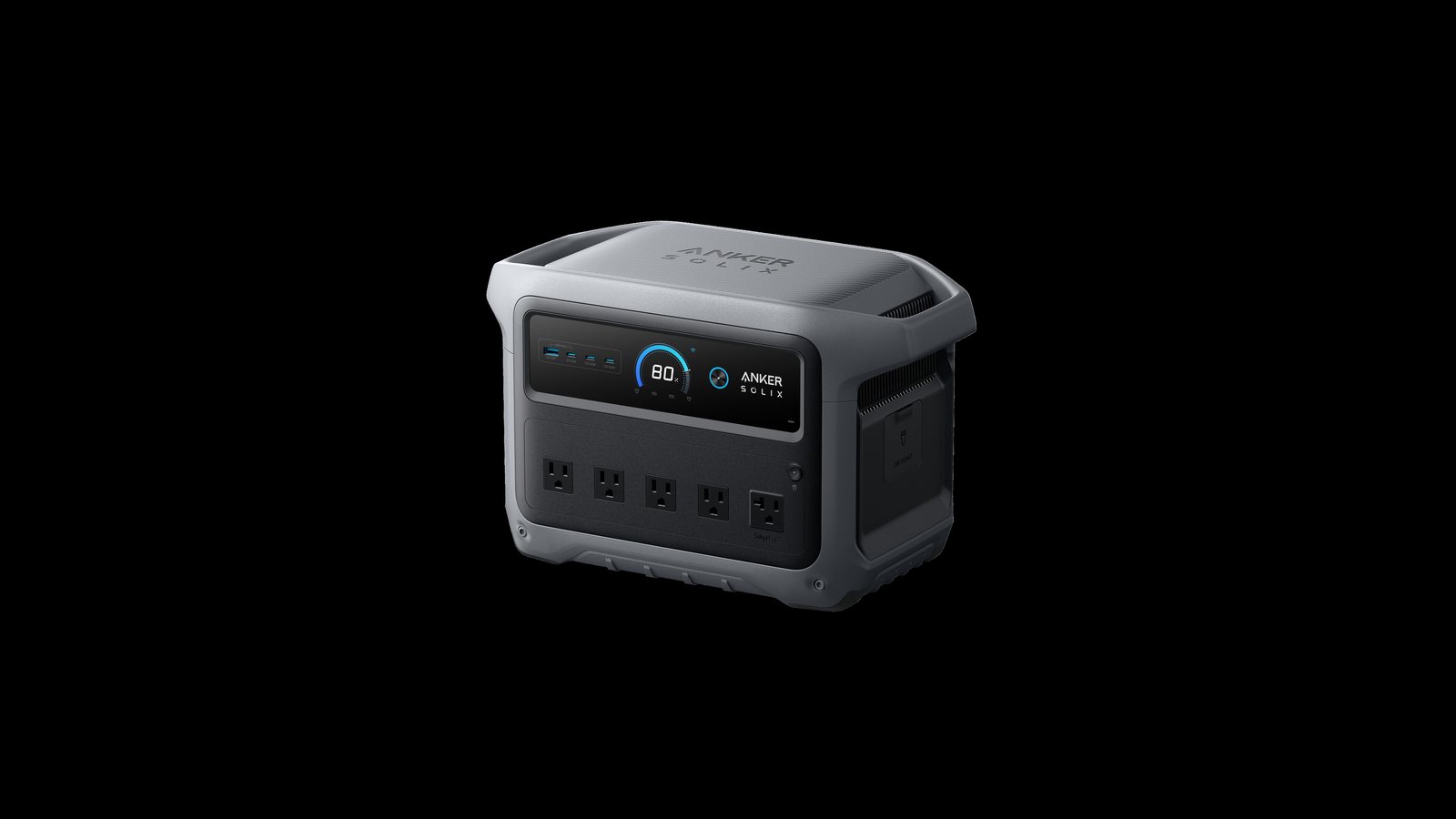
Highest Capacity Portable Power Station: The UL Rule Changes at 20 kWh
Check three numbers: battery size in one box, continuous AC output, and how far the system expands. The EcoFlow DELTA Pro 3 holds 4.0 kWh in one unit and grows to 48 kWh with added batteries, but plan on about 85 percent of any label reaching your devices.
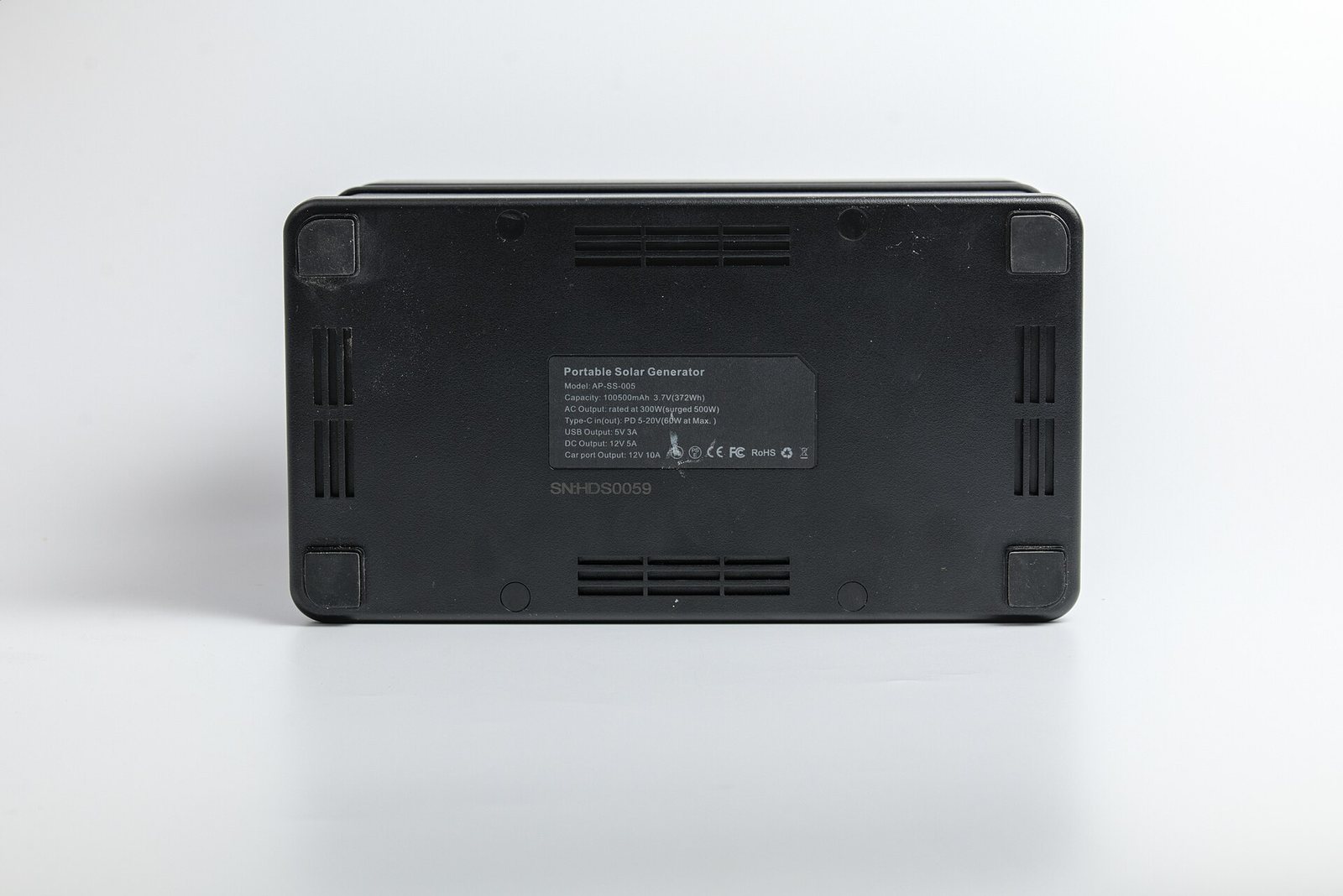
Start with the EcoFlow DELTA Pro 3.
Of the units compared here, it is the highest capacity portable power station. It holds 4.0 kWh in one box and can be expanded to as much as 48 kWh, according to OutdoorGearLab’s 2026 roundup, which names it “Best for Home Backup.” Popular Mechanics calls it “Best Whole-Home Backup.” That is the top figure in this comparison, not a record for the whole market.
There are two catches. Popular Mechanics says most portable power stations deliver about 85 percent of their listed capacity, and capacity doesn’t tell you how much a unit can power at once. Every figure below comes from the page linked next to it, read in October 2026.
“Largest” can mean three different numbers
WhichWatts’ guide says people searching for the largest power station usually mean one of three things:
- The biggest battery in one unit: the energy a single box carries to a campsite or van.
- The highest continuous AC output: how much it can run at the same moment, not in a short burst.
- The largest expandable system: how big it gets with added batteries, for outages that last days.
Pick the number that fits your job before you compare prices.
One unit reaches 4 kWh here; the expandable system reaches 48 kWh
The DELTA Pro 3’s two figures are 12 times apart (48 ÷ 4.0 = 12), per OutdoorGearLab. You buy the 4.0 kWh first. Getting to 48 kWh takes added batteries.
For scale, Popular Mechanics lists the Bluetti Elite 200 V2 at 2,073.6 Wh. OutdoorGearLab’s off-grid pick, the Jackery Explorer 2000 v2, holds 2,042 Wh. One DELTA Pro 3 holds 1.9 times the Bluetti (4,000 ÷ 2,073.6).
If capacity is what you’re shopping for, here is the catch: neither 2 kWh unit can grow. Popular Mechanics lists “No way to add expansion battery packs” among the Bluetti’s cons, and OutdoorGearLab lists “No battery expansion option” for the Jackery. If you expect to need more later, start with a system that expands.
Listed vs usable watt-hours: plan on about 85% of the label
Some stored energy is lost when the battery’s power is turned into AC, so the label overstates what reaches your devices. Popular Mechanics says most portable power stations deliver about 85 percent of their listed capacity on average.
Planning estimate = listed Wh × 0.85 (Popular Mechanics’ average); one DELTA Pro 3 = 4,000 Wh × 0.85 = 3,400 Wh (OutdoorGearLab’s 4.0 kWh figure).
| Unit (source) | Listed capacity | Listed × 0.85 (estimate) | Reviewer-measured output | Measured share |
|---|---|---|---|---|
| Jackery Explorer 2000 v2 | 2,042 Wh | ≈1,736 Wh | 1,710 Wh | ≈84% |
| Bluetti Elite 200 V2 | 2,073.6 Wh | ≈1,763 Wh | ≈1,908 Wh | 92% |
| EcoFlow DELTA Pro 3, one unit | 4,000 Wh | 3,400 Wh | — | — |
| DELTA Pro 3, fully expanded | 48,000 Wh | 40,800 Wh (rough scenario) | — | — |
The two measured rows sit either side of the estimate. OutdoorGearLab reports 1,710 Wh from the Jackery’s 2,042 Wh (≈84%). Popular Mechanics reports 92 percent from the Bluetti (2,073.6 × 0.92 ≈ 1,908 Wh). The 85 percent is one reviewer’s average across portable stations, and this page has no measured figure for a full 48 kWh stack.
Treat that row as a rough planning number built from two sources, not a rating.
LFP cycles: the Bluetti’s 6,000-cycle rating ends at 80%, not zero
LFP (lithium iron phosphate, or LiFePO4) is a type of battery chemistry. A cycle is one full drain and recharge. Popular Mechanics says the Bluetti Elite 200 V2’s LFP battery is rated for 6,000 cycles before it drops below 80 percent capacity.
At one cycle a day, that is about 16 years (6,000 ÷ 365 ≈ 16.4). At the end of the rating, the battery holds about 1,659 Wh listed (2,073.6 × 0.80). If the unit has to last, size for the worn-out number.
Capacity is not output: continuous watts still limit what runs
Watt-hours are how big the tank is. Continuous watts are how fast it can pour. The Jackery and Bluetti hold about the same energy (2,042 vs 2,073.6 Wh). Popular Mechanics gives the Bluetti Elite 200 V2 “a max output of 2,600 watts with 3,900-watt startup power,” and reports it ran a miter saw, blender and space heater at once.
OutdoorGearLab lists the Jackery Explorer 2000 v2 at 2,200 max AC watts.
Runtime = usable Wh ÷ load watts. Run flat out, the Jackery lasts roughly 47 minutes (1,710 Wh ÷ 2,200 W ≈ 0.78 h) and the Bluetti roughly 44 (1,908 ÷ 2,600 ≈ 0.73 h). Check the DELTA Pro 3’s continuous watts on EcoFlow’s spec sheet. Capacity sets how long things run.
Continuous watts set what can run at all.
Above 20 kWh, a battery stack moves from UL 2743 to UL 9540
The fuel-generator rule doesn’t apply. CPSC’s labeling rule at 16 CFR Part 1407 defines a portable generator as engine-driven and rated no higher than 15 kW and 250 V. A battery station has no engine, so it falls outside that definition.
The battery standard has a size limit. UL 2743, the standard for portable power packs, does not cover packs bigger than the limits it sets. Those fall under a different standard. UL’s scope puts lithium-ion packs above 20 kWh in total under UL 9540.
Its section 1.9 also sends packs that feed a home’s wiring to UL 9540.
A 48 kWh DELTA Pro 3 stack is 2.4 times that 20 kWh limit (48 ÷ 20). OutdoorGearLab describes wiring the DELTA Pro 3 to a breaker panel through a transfer switch, and that is the setup to check. Ask which standard covers the full setup you plan to install.
Price per watt-hour: $0.67 on the Bluetti; check the Jackery’s 40% markdown
Divide the price by delivered watt-hours where a reviewer reports them, and by listed watt-hours otherwise.
- Bluetti Elite 200 V2: Popular Mechanics shows it at $1,399 on Amazon (read October 2026). $1,399 ÷ 2,073.6 Wh ≈ $0.67 per listed Wh. Divided by the 1,908 delivered Wh, it is ≈ $0.73.
- Jackery Explorer 2000 v2: OutdoorGearLab’s July 23, 2026 update gives a $1,499 list price and says it “can now be found for under $900 on Amazon.” That is at least $599 off, about 40 percent. At $900 it works out to $0.44 per listed Wh (900 ÷ 2,042) and $0.53 per delivered Wh (900 ÷ 1,710). At $1,499 it is $0.73 per listed Wh.
A markdown that deep is worth checking against the store’s price history. If the unit has sat near $900 for months, the $1,499 is a reference price, not a sale. Recheck both prices on the brand’s own store. For an expandable system, add each expansion battery’s price and divide by the watt-hours it adds.
Our Anker SOLIX price per watt-hour breakdown and home battery backup systems priced per watt-hour use the same method.
The pick: DELTA Pro 3 for home backup, a single unit if you carry it
If you have to carry it, skip the 48 kWh stack and buy a single unit like the Jackery Explorer 2000 v2, which OutdoorGearLab lists at 39 lb. The Bluetti Elite 200 V2 delivers more of its capacity, but Popular Mechanics lists it at 53 lb.
The DELTA Pro 3’s weak spot is the build-out. Per WhichWatts, a system that scales to 25 kWh or more “changes the product from a portable unit into a semi-permanent home-backup system.” A full stack is past UL 2743’s 20 kWh limit, so check for a UL 9540 listing. Its panel hookup, per OutdoorGearLab, runs through an optional transfer switch kit.
Price that kit and each expansion battery on EcoFlow’s store before you count on 48 kWh.
Still, it is the only unit here that grows from one 4.0 kWh box to 48 kWh, and OutdoorGearLab says it is “designed specifically for home backup power use.” Buy it if you are sizing home backup, not power for a weekend away.
FAQ
What is the highest capacity portable power station in this comparison?
The EcoFlow DELTA Pro 3: 4.0 kWh in one unit, expandable to 48 kWh, per OutdoorGearLab.
Will a bigger battery run bigger appliances?
Not by itself. The output rating sets the load limit: the Jackery and Bluetti hold about 2 kWh each but list 2,200 W and 2,600 W, per OutdoorGearLab and Popular Mechanics.
Does a 48 kWh stack still fall under UL 2743?
No. UL’s scope sends lithium-ion packs above 20 kWh in total, and packs that feed home wiring, to UL 9540 instead of UL 2743. Ask for the listing that covers the full system.
Sources
- https://www.outdoorgearlab.com/topics/camping-and-hiking/best-power-station
- https://whichwatts.com/guides/largest-portable-power-stations
- https://www.popularmechanics.com/home/a32825530/best-portable-power-stations/
- https://www.techradar.com/best/portable-power-stations
- https://www.ecfr.gov/current/title-16/chapter-II/subchapter-B/part-1407
- https://www.shopulstandards.com/ProductDetail.aspx?productId=UL2743