Home Battery Backup Systems: Price per Watt-Hour, Real Output and Sizing
Size a home battery backup system from your outage list, then price it per watt-hour: BigBattery's NEXUS 2 kit from $0.29/Wh, ETHOS modules $0.21/Wh before an inverter.

Compare home battery backup systems by price per watt-hour.
You need two sums. The first is device watts × hours = the watt-hours (Wh) you need. The second is listed price ÷ watt-hours stored = price per Wh. BigBattery’s solar storage page (read October 2026) lists its NEXUS 2 battery with an EG4 6000XP inverter at 16.1 kWh, “Starting at $4744.99”. At that starting configuration, $4,744.99 ÷ 16,100 Wh = $0.29 per Wh. The same page starts ETHOS at $4,879.99 but doesn’t say how many modules or which inverter that buys.
Your outage list sets the size: device watts × hours = watt-hours
Ready.gov’s power-outage page starts outage planning with one task: list every item you need that runs on electricity. Give each item on that list three things:
- The device’s name.
- Its watts, from its label or manual.
- How many hours a day it has to run during an outage.
Multiply each device’s watts by its hours, then add up the results. The total is how many watt-hours you need per day. If anyone at home uses a powered medical device or medicine that needs refrigeration, Ready.gov says to make an outage plan with your medical provider. Put those items first, and get the provider’s answer before you size the system around them.
Watt-hours to runtime: 5,120 Wh ÷ 40 W = 128 hours, before losses
The EIA’s page on measuring electricity gives a simple example: a 40 W bulb on for five hours uses 200 Wh, which is 0.2 kWh. One kilowatt-hour is 1,000 watt-hours, so multiply a battery’s kWh rating by 1,000 to get the Wh figure you divide.
To get runtime, turn the sum around: capacity in Wh ÷ load in watts = hours. One ETHOS module holds 5,120 Wh, so on paper it would run that 40 W bulb for 128 hours. To get days of backup, divide capacity by the daily total from your list. Treat the answer as a maximum. The inverter, which turns the battery’s DC power into household AC, wastes some energy along the way, so real runtime comes in below the sum.
All-in-one or stackable: one plugs in, the other wires into your house
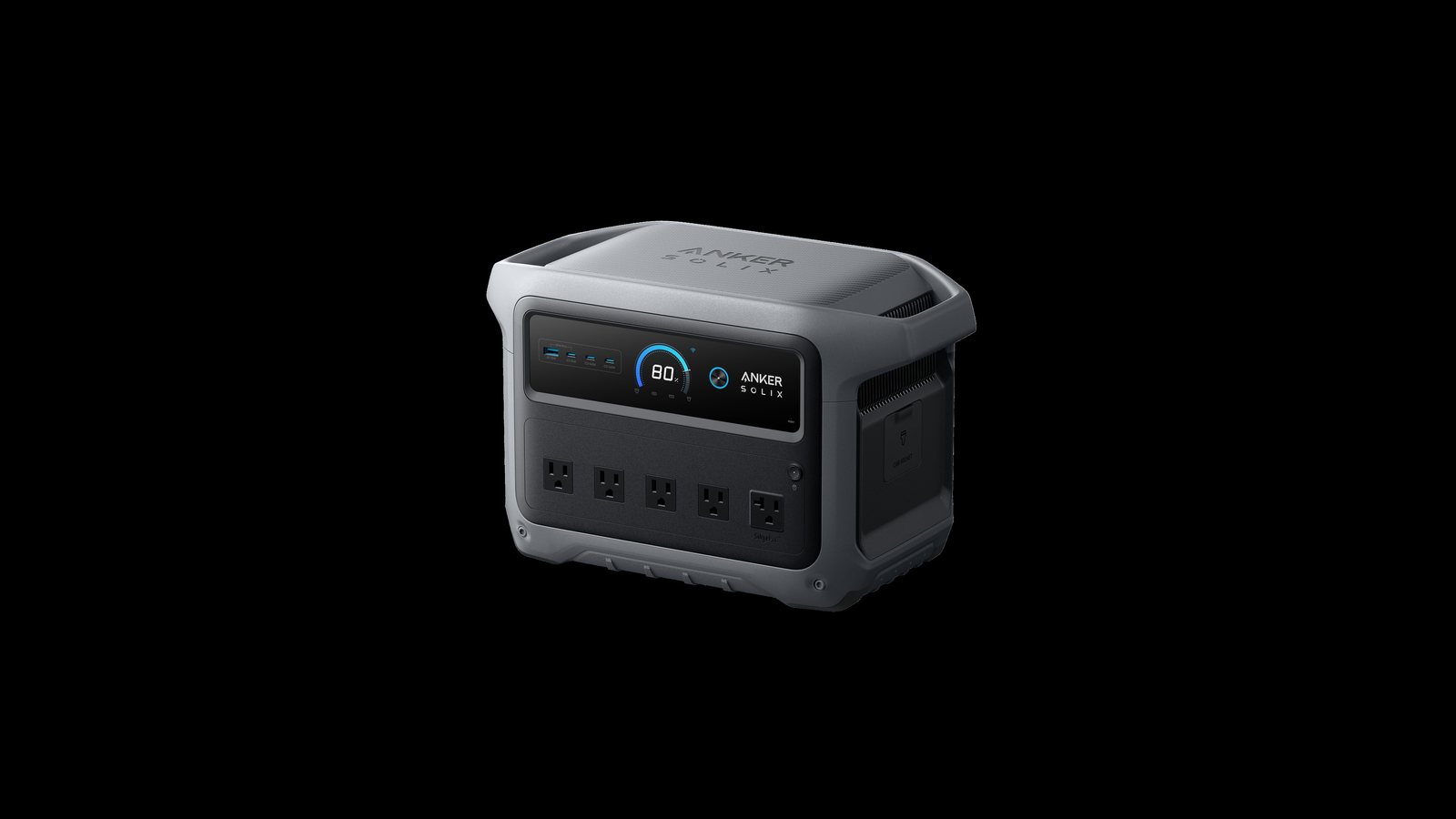
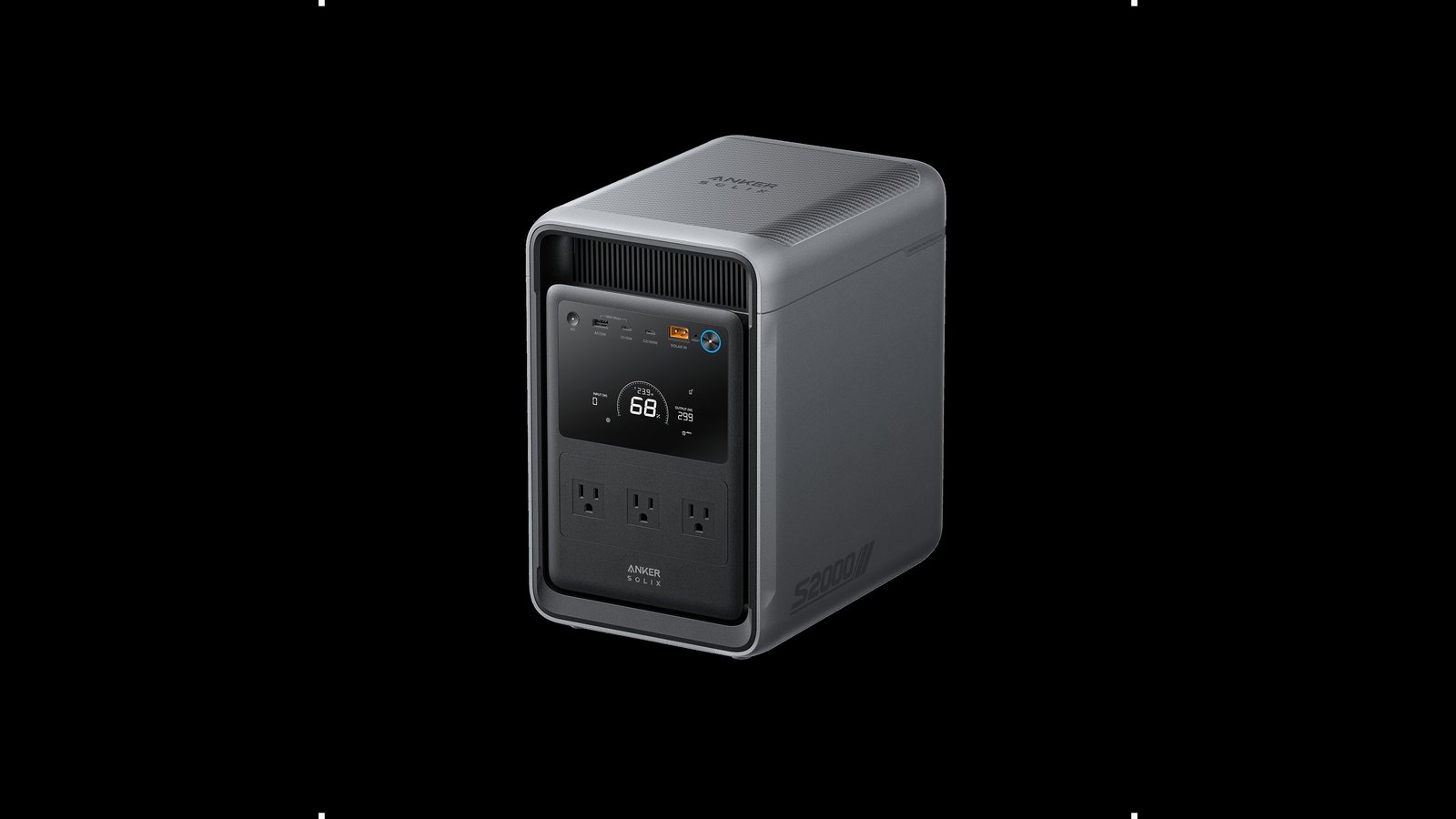
An all-in-one power station puts the battery, inverter and outlets in one case, and you plug devices straight into it. Portable packs like this fall under UL 2743. Our power stations by use section covers the plug-in options, and the power station price ledger lists the price, battery watt-hours and continuous watts of 15 plug-in models, read every day from each brand’s own store.
A stackable system splits the parts up. BigBattery’s ETHOS is built from modular, stackable 5.12 kWh batteries. It pairs with a separate EG4 inverter (the 6000XP, the 12000XP or the 18kPV Hybrid), and the store says that pairing gives “seamless UPS backup”, load control and AC coupling. Once a system connects to your home’s wiring, UL 2743 no longer covers it. The same UL page says packs connected to a building’s wiring, and lithium packs over 20 kWh, come under UL 9540 instead. Ask for the UL 9540 listing on any stack you get a quote for.
Price per watt-hour: $0.29 for the NEXUS 2 kit as advertised, $0.21 for ETHOS modules alone
Each row is listed price ÷ Wh (1,000 Wh per kWh, as the EIA defines it), labelled by what the listing includes.
| Listing (read Oct 2026) | Price | Storage | Price per Wh | Includes |
|---|---|---|---|---|
| NEXUS 2 + EG4 6000XP (BigBattery) | From $4,744.99 | 16,100 Wh | $0.29 | With inverter; starting configuration |
| ETHOS ESS (BigBattery) | From $4,879.99 | Not stated | Can’t compute | Module count and inverter not stated |
| ETHOS 15.4kWh 3 Module Expansion Kit (Signature Solar) | $3,279.50 (shown with $4,040.00) | 15,400 Wh | $0.21 ($0.26 at $4,040.00) | Battery only; no inverter named |
| Pytes V5 Battery Bank 20.48kWh (Signature Solar) | $7,049.00 | 20,480 Wh | $0.34 | Battery and enclosure; no inverter named |
Signature Solar’s listing doesn’t say when, or whether, anyone paid the higher price shown beside a sale price, so compare on what you’d pay now.
ETHOS modules come to $0.21 per Wh, below the NEXUS 2 kit’s $0.29, but they buy no inverter; the NEXUS 2 figure includes one. BigBattery’s ETHOS price names no module count or inverter, so ETHOS has no system price per Wh until a quote states modules, inverter and total.
The inverter sets your watts: a 7.6 kW battery behind a 6 kW 6000XP gives 6 kW
Continuous watts are what a system can supply for as long as the battery lasts. Surge watts are a short burst above that, for things like a motor starting up, and spec sheets list them as a separate number. Size your system to the continuous figure.
BigBattery’s NEXUS 2 kit shows why. The battery is rated for “7.6kW of continuous discharge” and the EG4 6000XP for “6kW of split-phase 120/240V output”, per BigBattery’s page. Your house gets 6 kW, the lower of the two. The page lists both kits under Off-Grid Systems, calls the 6000XP an “off-grid inverter”, and makes its “UPS backup” claim only in the ETHOS block. So ask for UPS backup in writing on any NEXUS 2 quote.
The same rule applies to ETHOS. Look up the continuous output of the EG4 inverter you choose, not the battery’s rating. Add up the watts of everything on your list that could run at the same time, and keep that total under the inverter’s continuous rating.
Adding storage: $1,093 per ETHOS module in a 3-pack; NEXUS 2 stacks to 241 kWh
Each ETHOS module adds 5,120 Wh. Signature Solar’s 3-module kit at $3,279.50 works out to $1,093.17 a module. The NEXUS 2 grows in 16.1 kWh units. BigBattery’s page gives no price for an added NEXUS 2 unit, and the ETHOS block gives no top size, so get both in writing before you plan to grow.
More capacity doesn’t mean more output. A bigger stack runs the same devices for longer, but the inverter still limits how much can run at once.
| From BigBattery’s page, read Oct 2026 | NEXUS 2 + EG4 6000XP | ETHOS + EG4 inverter |
|---|---|---|
| Most capacity stated | 15 units in parallel, 241 kWh | Not stated in the ETHOS block |
| Solar input | 8,000 W (6000XP) | Up to 24,000 W (inverter not named) |
| Cells | Tier-1 LiFePO₄, 8,000+ cycles | Not stated in the ETHOS block |
| Weather and fire | Self-heating; aerosol fire suppression | IP65; thermal suppression |
| Install and warranty | Floor-standing, no wall mount; 12-year US | One-person install; 12-year US |
The IRS battery credit ended for systems installed after 2025
The IRS residential clean energy credit page says battery storage “must have a capacity of at least 3 kilowatt hours.” The same page says the credit “is not available for any property placed in service after December 31, 2025.” It is now October 2026, so a battery installed today falls after that cutoff. Leave the credit out of your budget, check the IRS page again on the day you buy, and ask a tax professional about your own return. This is general information, not tax advice.
Price the NEXUS 2 kit first; get ETHOS in writing
ETHOS’s weak spot is its price tag: no ETHOS listing here gives modules, inverter and total together. It also needs a separate EG4 inverter and wiring into your home, which puts it under UL 9540 rather than the plug-in standard. What ETHOS offers is room to grow in 5.12 kWh steps, solar input up to 24,000 W, and the page’s UPS-backup claim. Price it if you want to start small and add later, with a written quote naming modules, inverter and total.
The NEXUS 2 kit has two limits. Its 6000XP caps output at 6 kW, so everything on your list that runs at once has to fit under that. And the smallest buy is a 16.1 kWh block, where ETHOS grows in 5.12 kWh steps. But it is the only listing here that states battery size, inverter and price together, on 8,000+ cycle cells with room for 241 kWh. Buy it if your list fits under 6 kW and needs about 16 kWh.
Use the NEXUS 2 kit’s $0.29 per Wh, at its advertised starting configuration, as your benchmark. Any quote that comes in higher per Wh, inverter included, has to justify the difference.
Who should skip both: renters and anyone who wants no wiring work. Instead, price a plug-in all-in-one from power stations by use with the same price ÷ Wh sum, and check its continuous watts and its UL 2743 marking.
FAQ
Does the fridge need to be on the battery?
Only if your outages run longer than it holds cold. Ready.gov says a closed refrigerator keeps food cold for about four hours, and a full freezer holds its temperature for about 48 hours.
How do I protect devices when grid power returns?
Ready.gov says to turn off or disconnect appliances and electronics during an outage, because power may return with momentary surges or spikes that can cause damage.
Should my home phone go on the outage list?
Ready.gov says to find out whether your home phone works in a power outage and how long its battery backup lasts. If it needs power, list it.
Sources
- https://bigbattery.com/solar/
- https://www.irs.gov/credits-deductions/residential-clean-energy-credit
- https://www.ready.gov/power-outages
- https://www.eia.gov/energyexplained/electricity/measuring-electricity.php
- https://www.shopulstandards.com/ProductDetail.aspx?productId=UL2743
- https://signaturesolar.com/home-backup-kits/