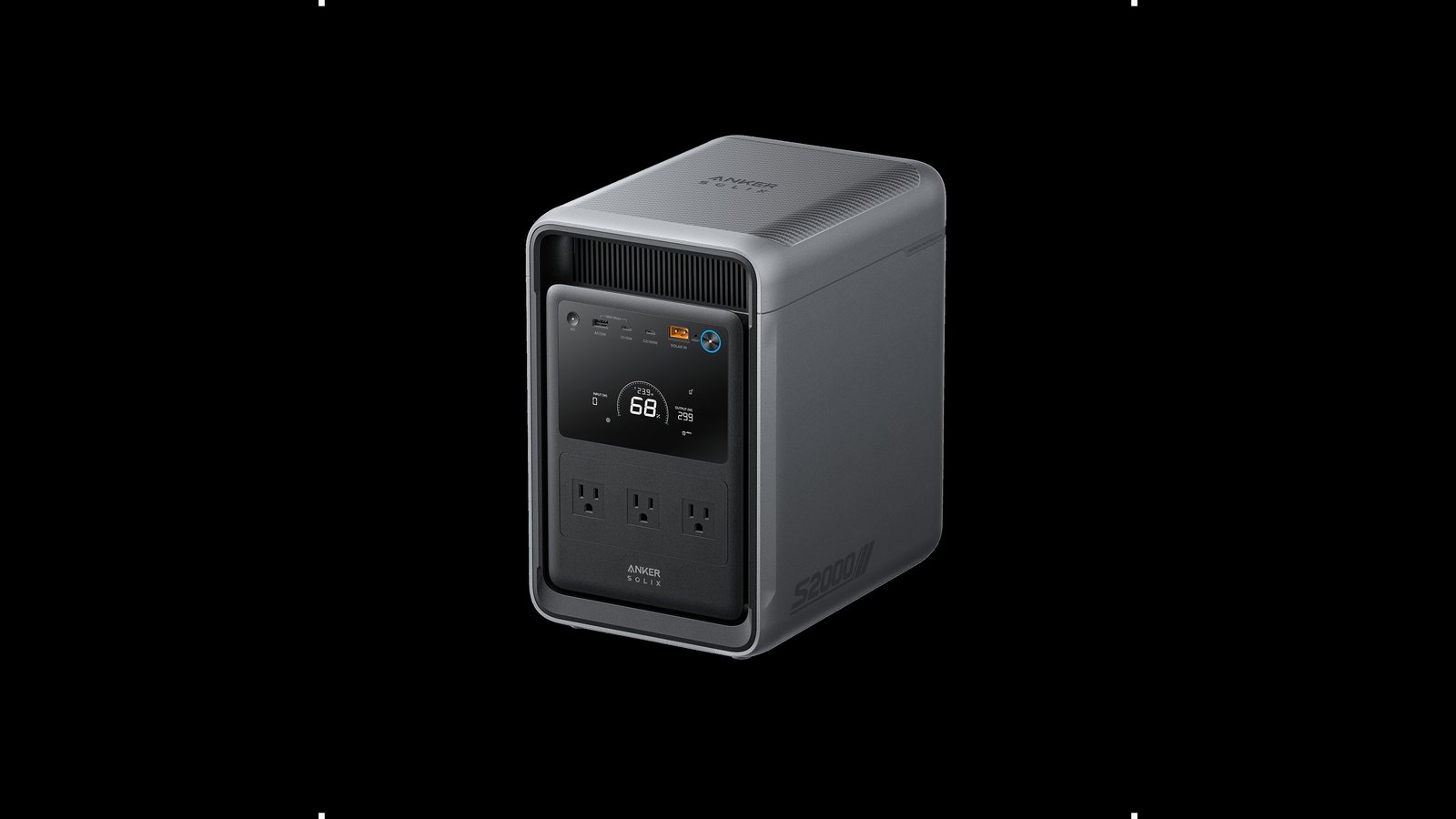
Best Portable Power Station: Two Review Lists Pick the Same One
OutdoorGearLab's power station list (updated July 23, 2026) calls the Anker SOLIX C1000 Gen 2 "the best value power station for most people" and reported.
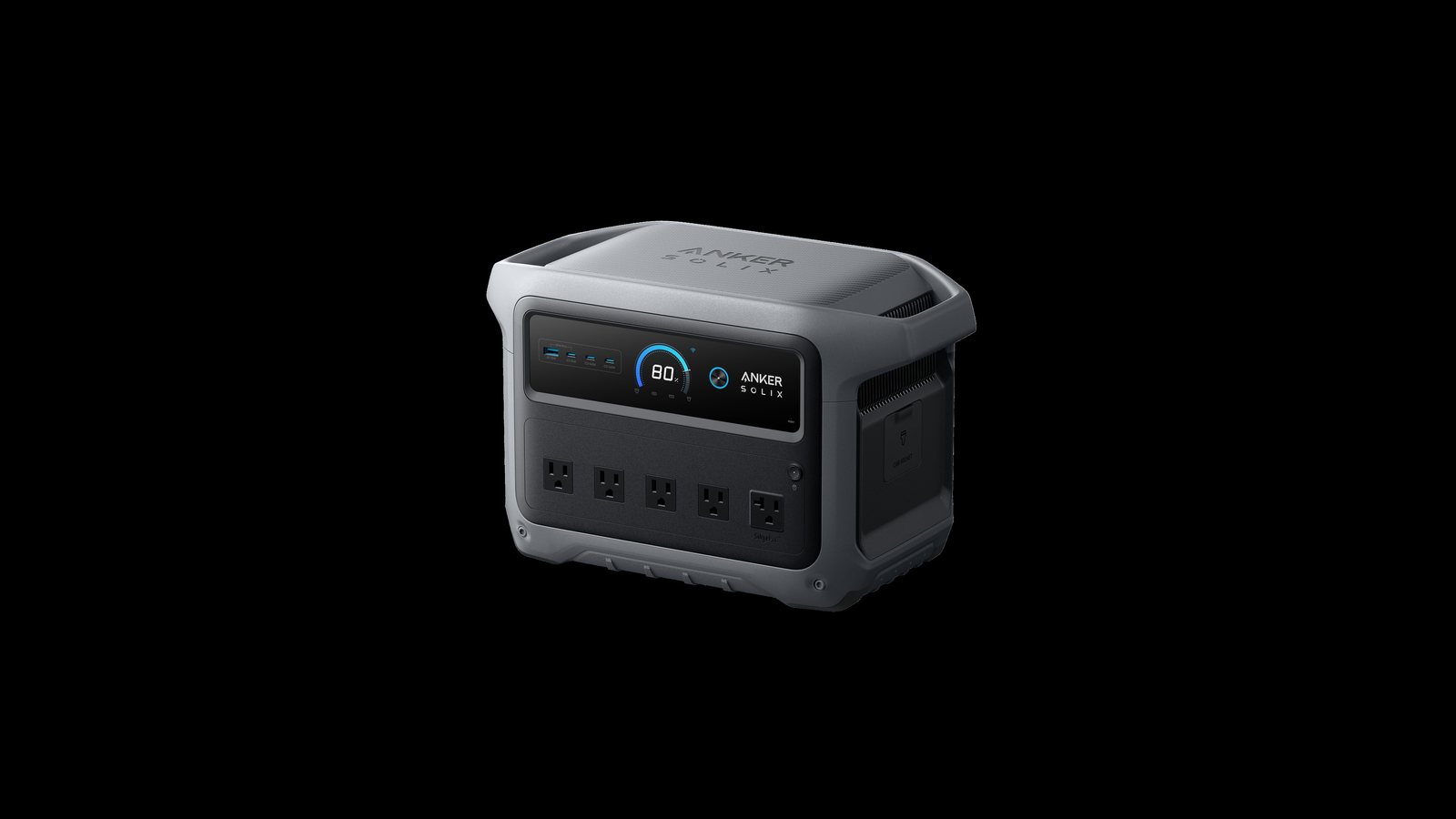
OutdoorGearLab’s power station list (updated July 23, 2026) calls the Anker SOLIX C1000 Gen 2 “the best value power station for most people” and reported it “on sale for under $530.” TechWriterEDC’s list also picks it for most people. At 1,024 Wh, that sale price is under $0.52 per watt-hour, about 17% above the Jackery’s rated figure below. The best portable power station for you can still be a different unit: one holds twice the battery, one wires into a breaker panel, and one is sized for a CPAP.
Quick picks: Anker for most people, Jackery for off-grid camping, EcoFlow for home backup
Most people: Anker SOLIX C1000 Gen 2. Under $530 on sale, per OutdoorGearLab (July 23, 2026).
- According to TechWriterEDC, it has 1,024 Wh, 2,000 W continuous, LiFePO4 cells and a 49-minute recharge.
- Weak spot: half the Jackery’s battery. Skip it if one box must hold 2,000 Wh; pick the Jackery Explorer 2000 v2.
Extended off-grid camping: Jackery Explorer 2000 v2. OutdoorGearLab’s favorite for long off-grid trips: 2,042 Wh rated, recently cut to under $900, per OutdoorGearLab (July 23, 2026).
- OutdoorGearLab says most people will find its 39 lbs easy to pack and move, yet lists “Somewhat heavy at 39 lbs” and “No battery expansion option” as cons.
- Skip it if you want to add batteries later; pick the EcoFlow DELTA Pro 3 or Bluetti AC200Max.
Home backup: EcoFlow DELTA Pro 3. OutdoorGearLab’s home-backup pick (July 23, 2026). Its price is not in these lists; the power station price ledger reads it from EcoFlow’s store every day.
- It holds 4.0 kWh and can grow to 48 kWh.
- Weak spot: breaker-panel wiring needs an optional transfer switch kit, so price both. Skip it if you only need power at camp or a desk; pick the Anker C1000 Gen 2.
CPAP and home office: a 1,000 Wh-class LFP unit. TechWriterEDC says a 1,000Wh-class unit can “power a CPAP for multiple nights,” so the 1,024 Wh Anker fits. Practical Self Reliance (Aug 02, 2024) names the smaller Bluetti EB55 for CPAP use, at 8-10 hours.
- Weak spot: the EB55 pick is two years old. Skip it if you want a 2026 pick; choose the Anker C1000 Gen 2.
Every pick side by side: cost per Wh, Wh per pound and expansion ceiling
| Unit | Picked by (date) | Figures the list gives | Arithmetic | Confirm on the brand’s page |
|---|---|---|---|---|
| Anker SOLIX C1000 Gen 2 | OutdoorGearLab, best value for most people (Jul 23, 2026); TechWriterEDC, best for most people | 1,024 Wh; 2,000 W continuous; LiFePO4; 49-min recharge; under $530 on sale | $530 ÷ 1,024 Wh = under $0.52/Wh | Today’s price vs. the crossed-out price |
| Jackery Explorer 2000 v2 | OutdoorGearLab, extended off-grid camping (Jul 23, 2026) | 2,042 Wh rated; 1,710 Wh measured; 39 lbs; under $900 | $900 ÷ 2,042 = under $0.44/Wh rated, under $0.53/Wh measured; 2,042 ÷ 39 ≈ 52 Wh/lb | Chemistry, continuous watts |
| EcoFlow DELTA Pro 3 | OutdoorGearLab, home backup (Jul 23, 2026) | 4.0 kWh, can grow to 48 kWh; breaker-panel wiring via optional kit | 48 kWh, the highest ceiling here | Price, weight, kit price |
| Bluetti AC200Max | Practical Self Reliance (Aug 02, 2024) | 2,200 W output; 62 lbs; 2,048 Wh, can grow to 8,192 Wh | 2,048 ÷ 62 ≈ 33 Wh/lb | Whether 2,200 W is continuous; current price |
| Bluetti AC300 | Practical Self Reliance (Aug 02, 2024) | Can grow to 12,288 Wh | 12,288 Wh, about a quarter of 48 kWh | Base capacity, weight, price |
What the table shows that no single list does: the Jackery and the AC200Max hold almost the same battery (2,042 Wh vs. 2,048 Wh), but the Bluetti weighs 23 lbs more.
How we evaluated
The three lists made the picks: every unit here is named by OutdoorGearLab (July 23, 2026), TechWriterEDC or Practical Self Reliance (Aug 02, 2024). We compared them on what those lists give: continuous watts, chemistry, expansion ceiling, weight and dated price per watt-hour. Gaps, such as the Jackery’s continuous watts or the DELTA Pro 3’s price, sit in the table’s last column. Each skip line names the fix for that pick’s weak spot.
Rank on continuous watts; LFP batteries are rated for years longer than NCM
TechWriterEDC ranked on sustained output: “Continuous output mattered more than inflated surge ratings.” Continuous watts is what a unit carries until the battery runs out; surge is a short burst for motor starts.
At its full 2,000 W, the Anker’s 1,024 Wh lasts 1,024 ÷ 2,000 ≈ 0.51 hours, about 31 minutes before conversion losses. For scale, OutdoorGearLab measured 1,710 Wh from the Jackery’s 2,042 Wh rating, about 84% usable (1,710 ÷ 2,042). A runtime estimate built on the label would come out about 19% too long (2,042 ÷ 1,710 ≈ 1.19).
TechWriterEDC prioritized LiFePO4 (LFP, lithium iron phosphate) “for long-term reliability and cycle life.” Practical Self Reliance (2024) says Bluetti’s LFP units are “rated for 10+ years of daily use,” while Jackery’s NCM units of that time were rated for “about 2 years of daily use” and were roughly 30% lighter. That was Jackery’s older line; check the Explorer 2000 v2’s own spec sheet.
The AC200Max weighs 23 lbs more than the Jackery but can expand; a 2026 pick grows to 48 kWh
With expansion batteries, Practical Self Reliance says the AC200Max grows from 2,048 Wh to 8,192 Wh, and the AC300 can reach 12,288 Wh. The Jackery cannot grow at all. The DELTA Pro 3 goes furthest: OutdoorGearLab lists it growing from 4.0 kWh to 48 kWh.
Per rated watt-hour, the Anker’s sale cap is about 17% above the Jackery’s
On the sale prices given, the Anker comes to $530 ÷ 1,024 Wh = $0.518 per watt-hour and the Jackery to $900 ÷ 2,042 Wh = $0.441 per rated watt-hour. That puts the Anker about 17% higher ($0.518 ÷ $0.441 ≈ 1.17). It is the cheaper box but the dearer watt-hour.
What the extra buys, per TechWriterEDC: 2,000 W continuous, LiFePO4 cells and a 49-minute recharge. Check the Jackery’s figures on its own spec page before counting those as Anker wins. If watt-hours per dollar matter most, the Jackery’s cap is lower.
Both prices are “under” figures, so the exact gap can differ. Divided by its usable 1,710 Wh, the Jackery’s cap rises to under $0.53/Wh ($900 ÷ 1,710 = $0.526). Use the same basis for every unit you compare.
UL 2743 covers the battery pack, the federal generator rule covers engines, and the IRS credit has ended
UL 2743 is the safety standard for portable power packs. It covers “inverters, vehicle adapters, and internal batteries, as well as the charging of the internal batteries.” Its third edition (Sept 24, 2025) adds a “UPS standard for power pack with AC pass through function,” the part that matters for a CPAP or desk setup.
The U.S. Consumer Product Safety Commission’s rule, 16 CFR Part 1407, defines a portable generator as an “internal combustion engine-driven electric generator rated no higher than 15 kilowatts and 250 volts.” A battery unit has no engine, so the rule’s labeling requirements aim at fuel units.
The IRS Residential Clean Energy Credit “is not available for any property placed in service after December 31, 2025.” Leave it out of the price.
Nine checks before you pay for any power station
- Name the job first (camping, home backup, CPAP or desk) and start from the matching power stations by use.
- Read continuous watts on the brand’s spec sheet and compare it with your biggest load.
- Find the chemistry (LFP or NMC) and the rated cycles on the same sheet.
- Divide the price by the watt-hours, and by usable watt-hours where a list measured them.
- Find the expansion ceiling, then divide one expansion battery’s price by its watt-hours.
- On the day you buy, check the sale price against the crossed-out price and the brand’s price history; the power station price ledger logs the day each brand-store price moves.
- For a CPAP or desk setup, find the brand’s switchover figure, its wording (“UPS”, “EPS”) and a UL 2743 listing.
- Note the weight and warranty years from the brand’s page.
- Leave the IRS credit out of the math.
The Anker’s weak spot is battery size. Its 1,024 Wh is half the Jackery’s 2,042 Wh, and at its full 2,000 W it runs about 31 minutes before losses. If that is too little, the Jackery Explorer 2000 v2 holds twice as much, though it can’t add batteries later. But the Anker delivers 2,000 W continuous on LiFePO4 cells at under $530.
If one unit has to cover most jobs, start with the Anker C1000 Gen 2. Move up to the Jackery Explorer 2000 v2 for more battery in one carry. Choose the DELTA Pro 3 if you want it wired into your breaker panel.
Sources
- https://www.outdoorgearlab.com/topics/camping-and-hiking/best-power-station
- https://techwriteredc.com/best-portable-power-stations/
- https://ashleyadamant.substack.com/p/best-and-worst-portable-power-stations-dd8
- https://www.shopulstandards.com/ProductDetail.aspx?productId=UL2743
- https://www.ecfr.gov/current/title-16/chapter-II/subchapter-B/part-1407
- https://www.irs.gov/credits-deductions/residential-clean-energy-credit